
American Airlines
Building American Airlines’ First UX Organization
When I joined American Airlines, there was no formal UX discipline—no design standards, no cohesive process, and a seven-year-old digital interface holding back customer experience and business performance.
My mandate became clear:
Build the UX function from the ground up and modernize the core digital experiences travelers rely on every day.
Over the next four years, we transformed not just the screens, but the system behind them.
The Challenge
No established UX team or operating model
An outdated digital experience across web and mobile
Fragmented workflows between Marketing, IT, and business teams
High-volume journeys (booking, check-in, account management) causing friction for customers
No design standards or interaction patterns to support consistency
American Airlines needed more than a redesign—it needed a UX capability that could scale.
What I Built
1. The First UX Team for AA.com
I established the company’s first dedicated UX group, starting with 3 people and scaling to 30 information architects, interaction designers, visual designers, and front-end developers.
I defined the team’s structure, hiring profile, processes, and engagement model with cross-functional partners.
2. A Scalable UX Practice
To support an enterprise of AA’s size, we introduced:
Formal design workflows
Strategy briefs and journey frameworks
Storyboards, wireframes, prototypes
Cross-functional operating rhythms
Review rituals and decision frameworks
This transformed UX from a service to a strategic partner inside the organization.
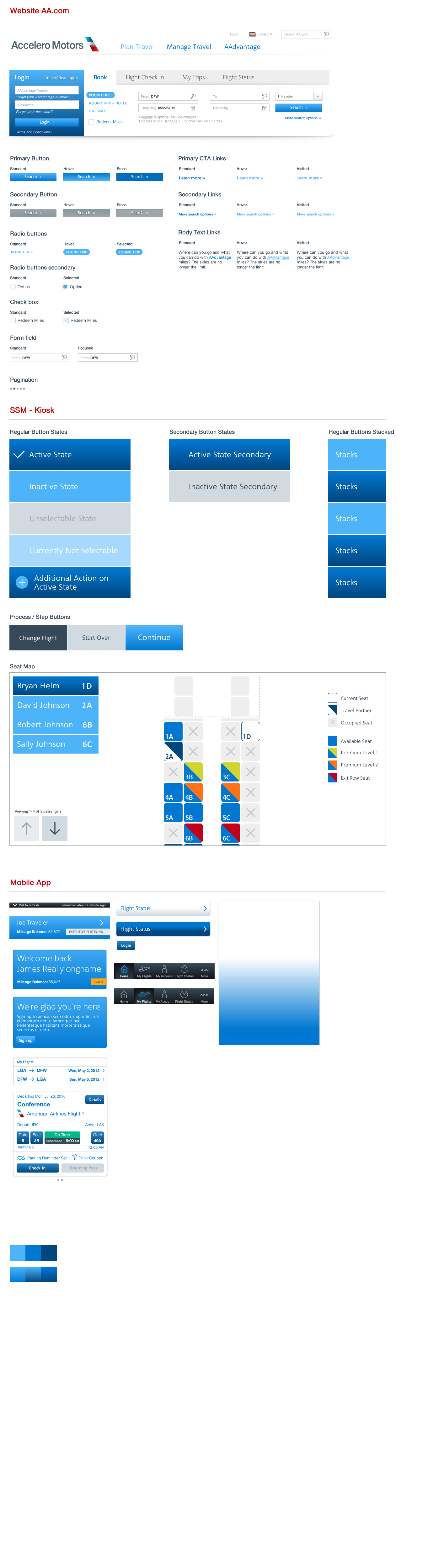
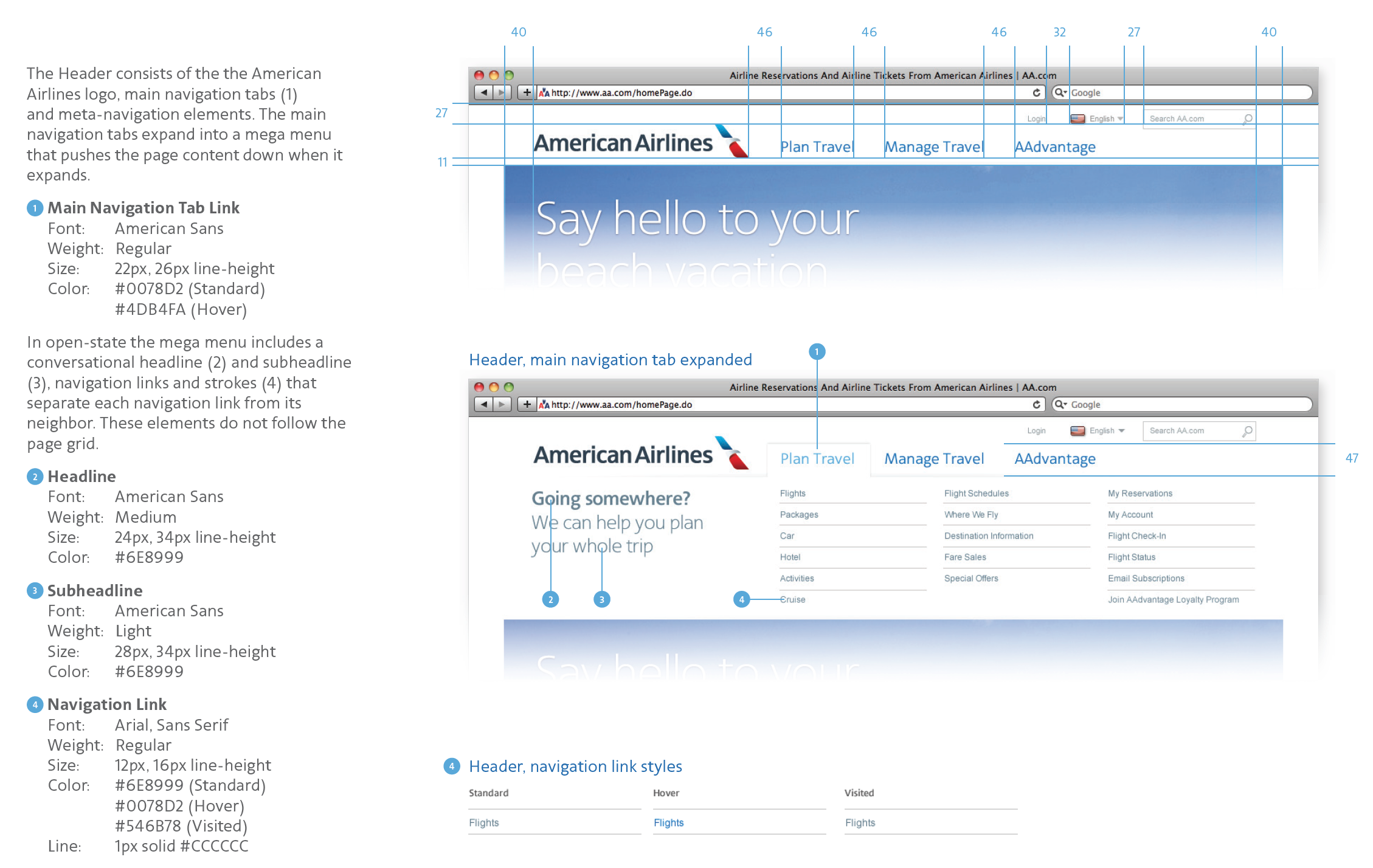
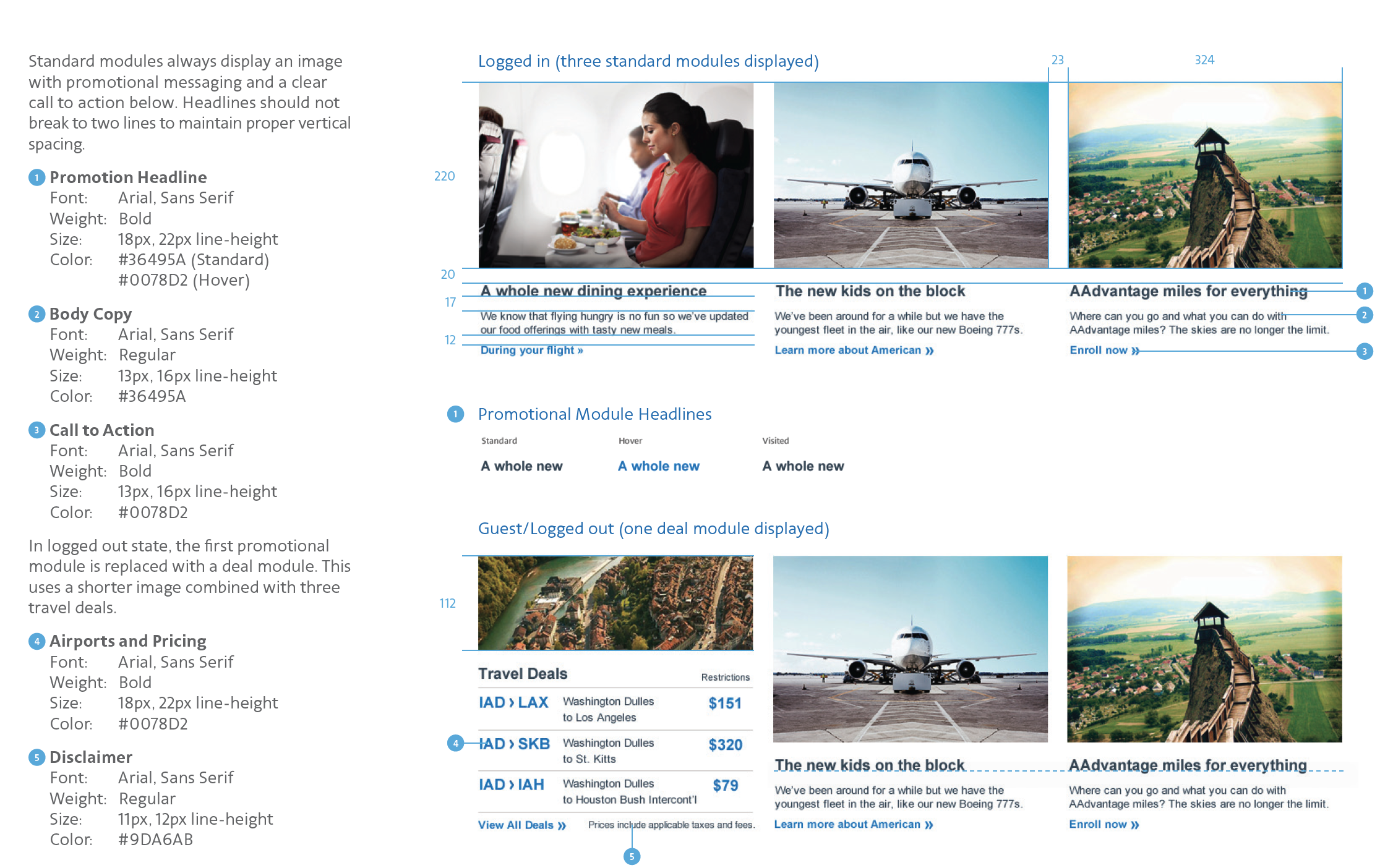
3. American’s First Digital Design Standards
I built a unified foundation for all digital surfaces:
Online standards
Modular interaction patterns
Style guides
Global UX principles for web, mobile web, and iOS apps
This ensured consistency across every customer-facing experience.
* Online flight, car and hotel reservations
* Vacation and last-minute packages
* Admirals Club membership enrollment and day pass purchases
* Personalized home page fare sale notices
* Interactive seat selection
* Automatic flight status notification
* AAdvantage travel award redemption
* AAdvantage enrollment & account maintenance
* Online check in and boarding pass printing
* Signing up for newsletters and personalized special offers
“Site navigation has been greatly improved. Key tasks, like flight booking, account log-in, and flight check-in, now appear in the same navigation menu... The result is a home page that looks more like a travel retailer than “just” an airline Web site.”
Henry Harteveldt, Forrester Research
AA.com launched with fewer than 30 employees in May 1995. AAdvantage members were given the option to conduct their business online via a software package called PC Access. Upon request, customers were mailed a CD that could be used to look up their AAdvantage information and make travel reservations.
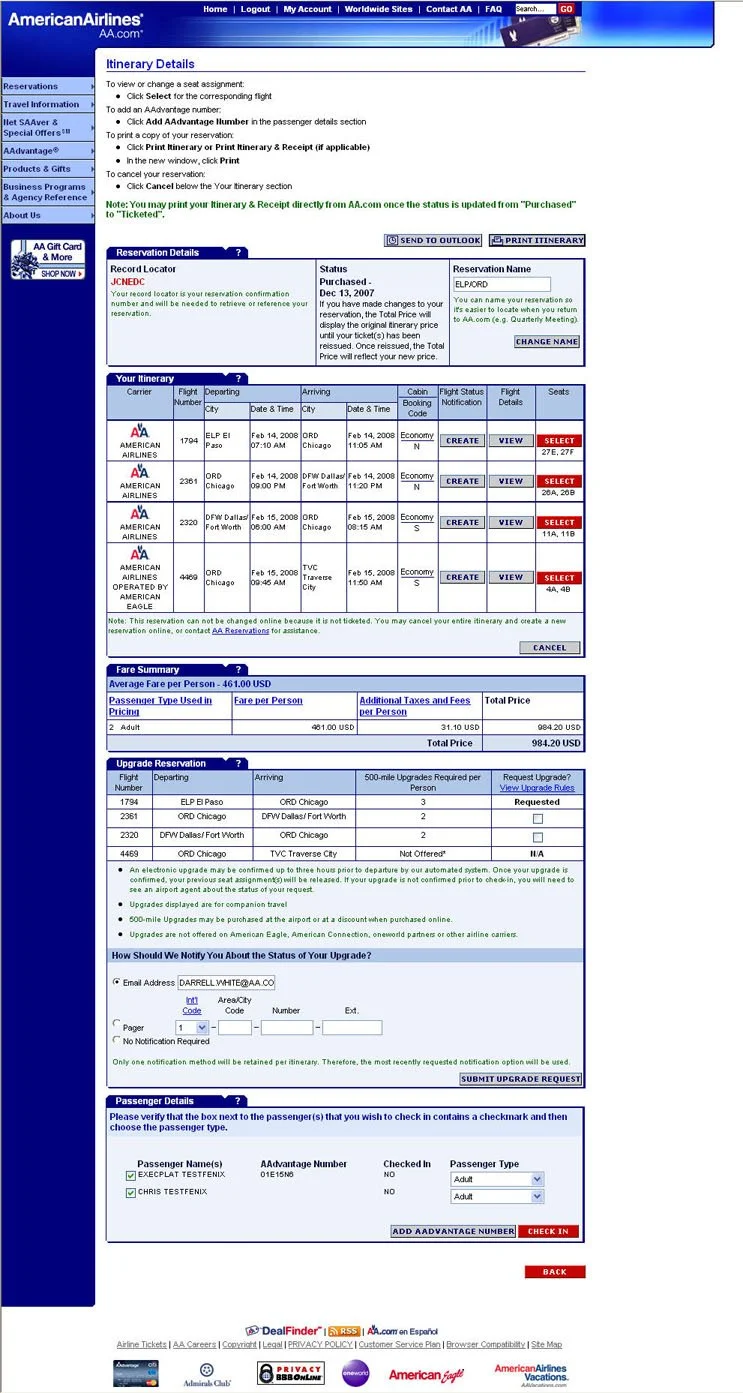
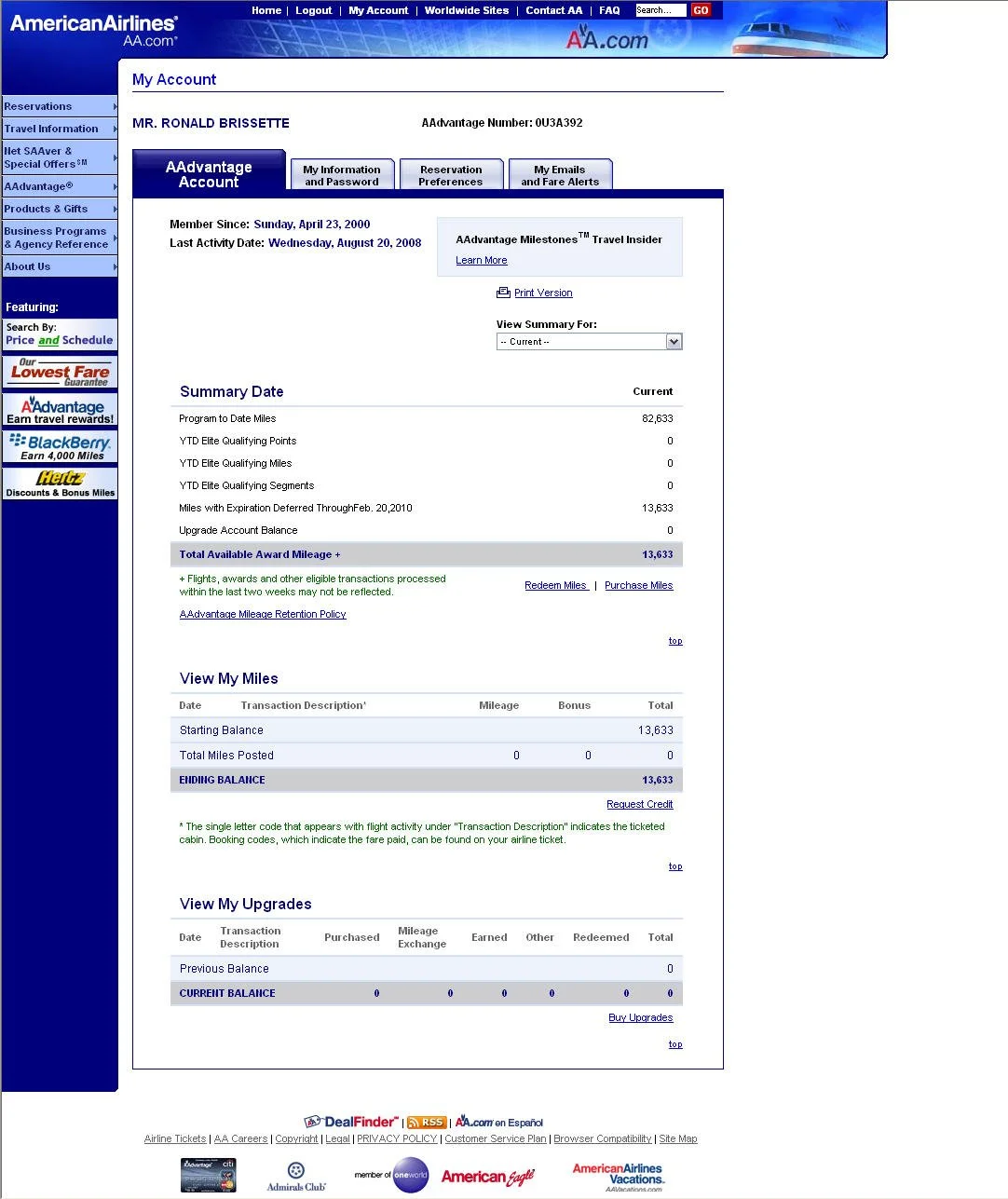
Evolution of AA.com
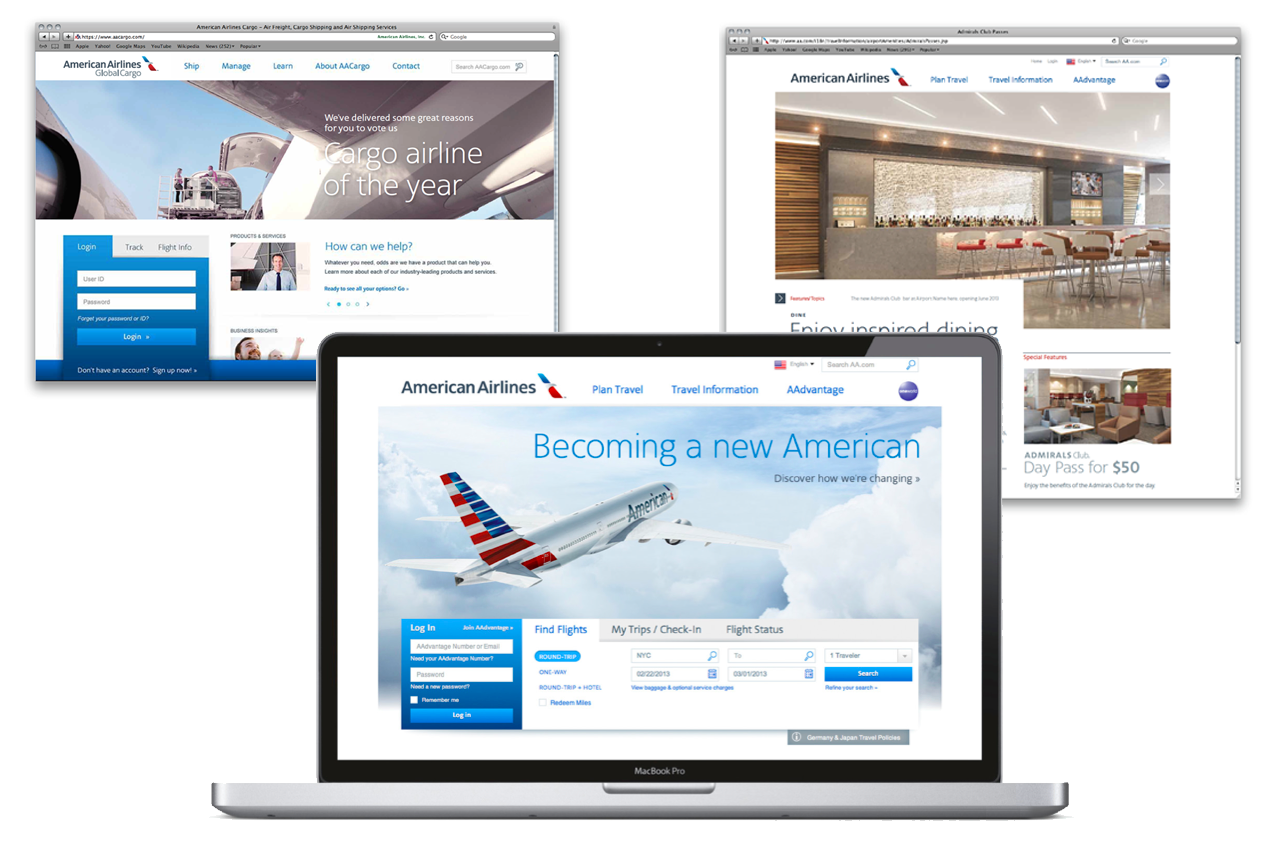
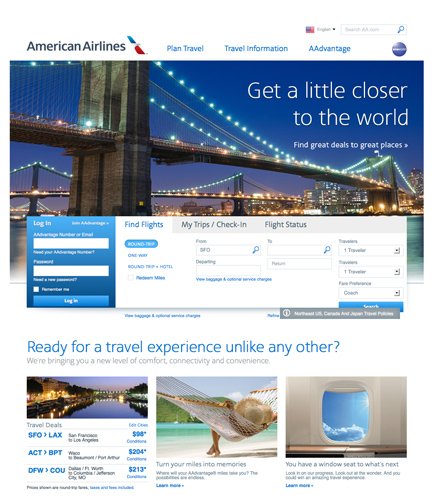
With a design that hadn’t seen an upgrade since 2002, it was time for AA.com to move up. The refreshed site took flight with smarter navigation, simpler organization and more visual cues.
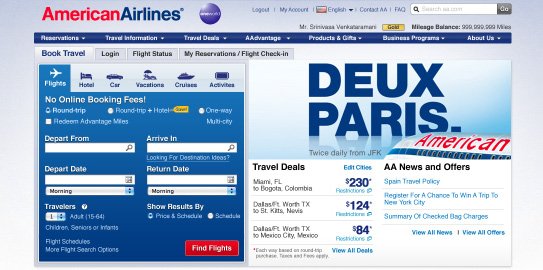
We developed the Trip Dashboard to help make booking on AA.com a breeze. The thoughtful layout, clean design and sensible interactions allow users to easily flow through the process of starting their next journey.
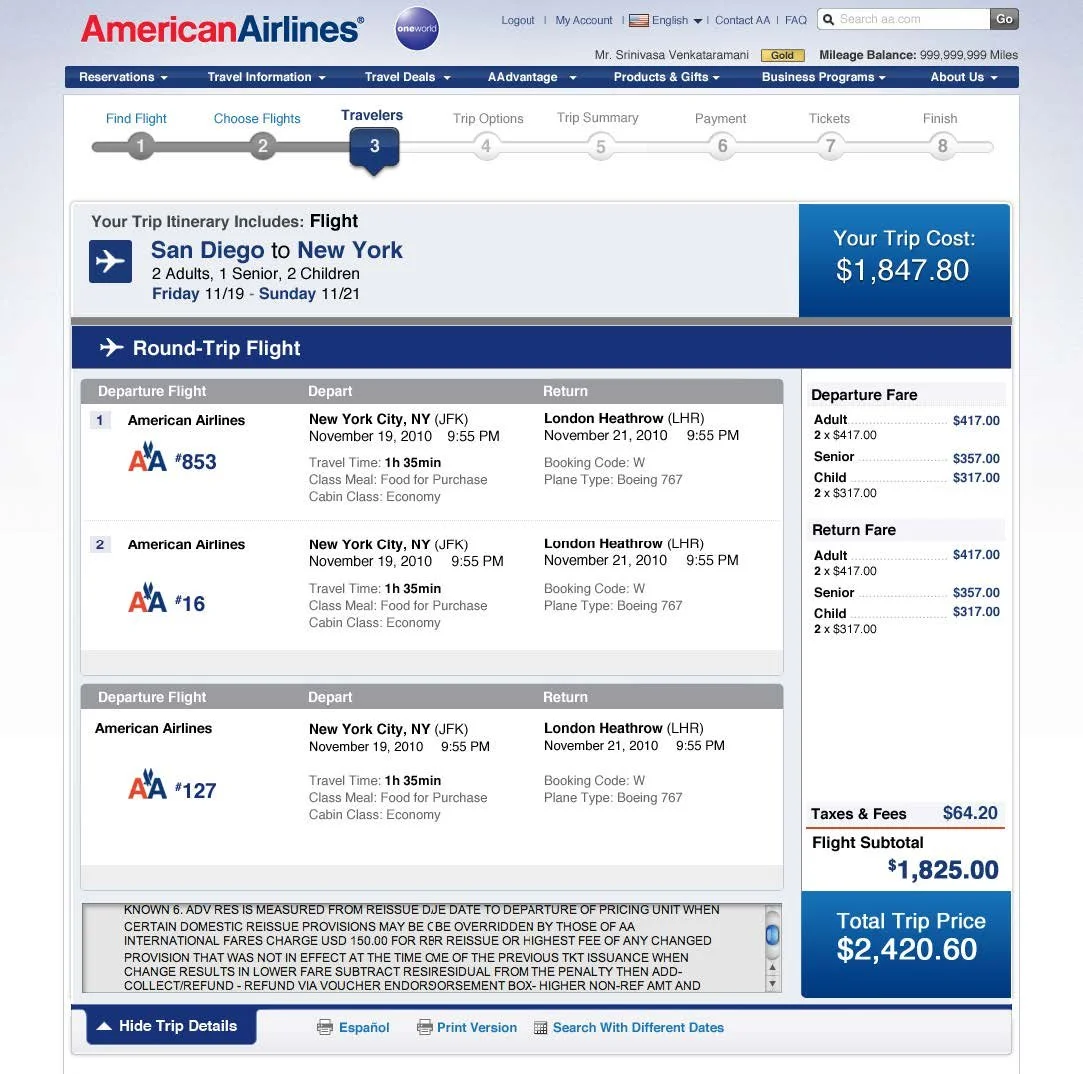
With a design that hadn’t seen an upgrade since 2002, it was time for AA.com to move up. The refreshed site took flight with smarter navigation, simpler organization and more visual cues.
What the Team Delivered
1. The First Redesign of AA.com in Seven Years
We modernized the entire customer-facing experience, including:
Revenue and award booking flows
Flight check-in
My Account and loyalty features
Navigation, hierarchy, and core UI patterns
2. Modernized Experiences Across Web + iOS
We aligned mobile and web surfaces so customers encountered a cohesive, predictable experience at every touchpoint.
3. Connected the Organization Around a Unified CX Vision
We partnered with Marketing, IT, Loyalty, and Customer Service to align policies, processes, and digital flows—ensuring the digital story matched the operational reality.